SELECTED ACADEMIC WORKS
THE ARCHITECTURAL TRANSPOSITION OF SPATIAL TEXTURE: AI SPATIAL TEXTURE MACHINE
ABSTRACT
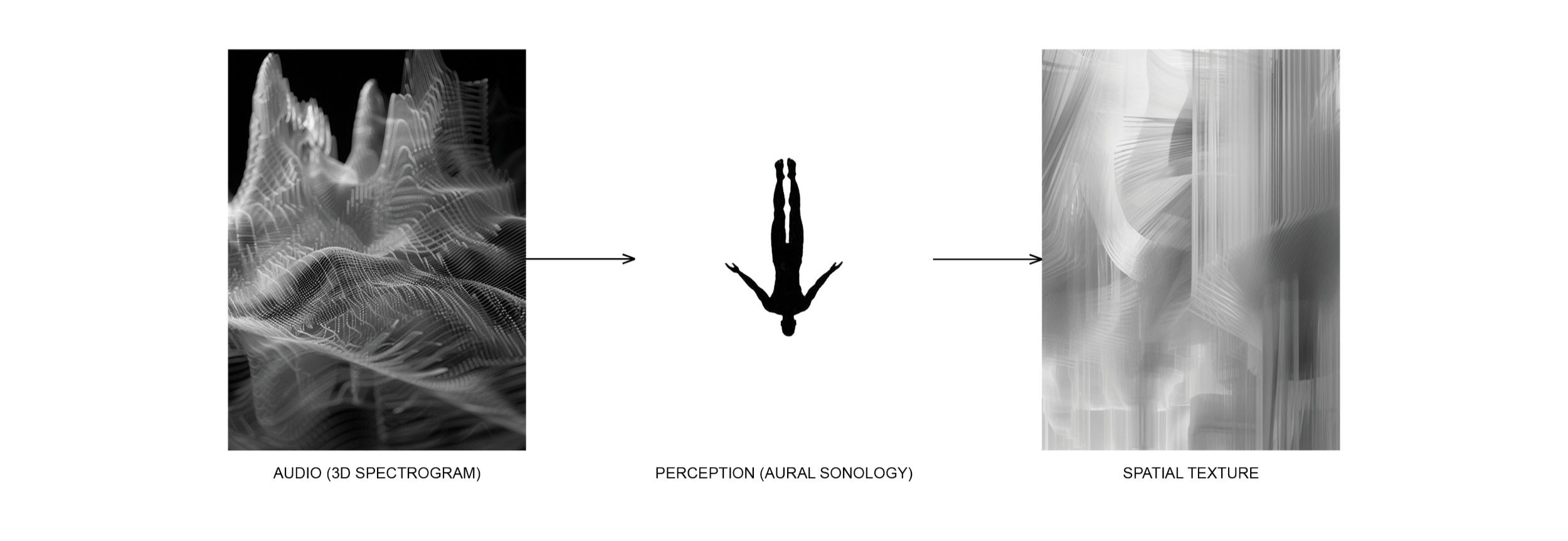
Spatial Texture: Spatial texture refers to the perceived spatial qualities of sound. It involves how sound is perceived in space and interprets auditory cues to perceive sound sources within a spatial environment. It is the depth, layering, and dimension through the spatial organization of elements like melodies, harmonies, rhythms, and textures. It is an internal mapping of external stimuli that creates a sense of space, movement, and atmosphere or complexity, referred to as spatial verisimilitude.
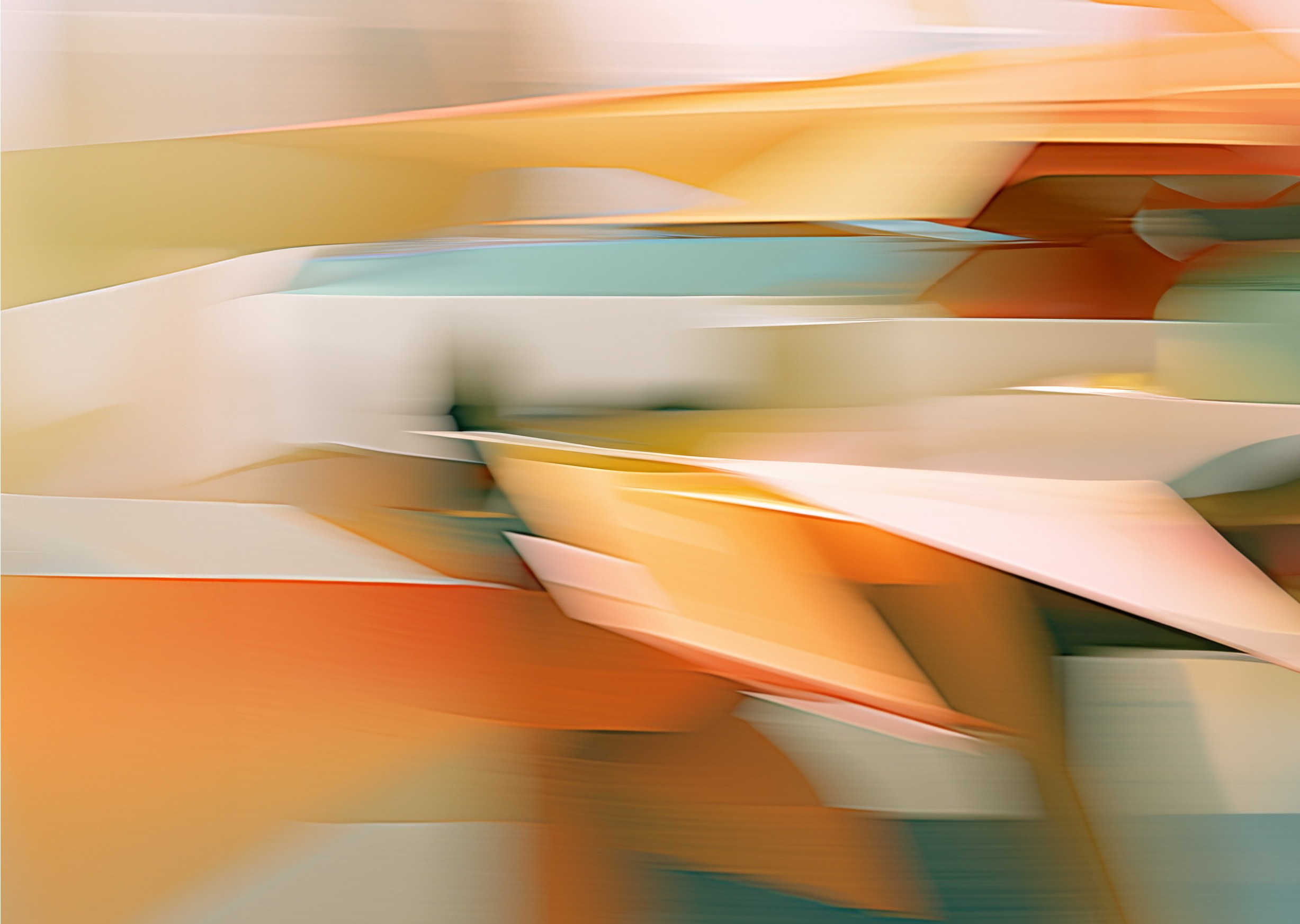
The research aims to establish or enhance a spatial design methodology that renders the invisible perceptual phenomena of spatial texture visible. Spatial texture refers to the perceived spatial qualities of sound. It is a phenomenological perspective of sound as heard. Spatial texture involves the perception of volumes, planes, contours, fields, and points as auditory and visual imagery.
A multimodal AI is proposed to simulate the neural networks that facilitate the perception of spatial texture.
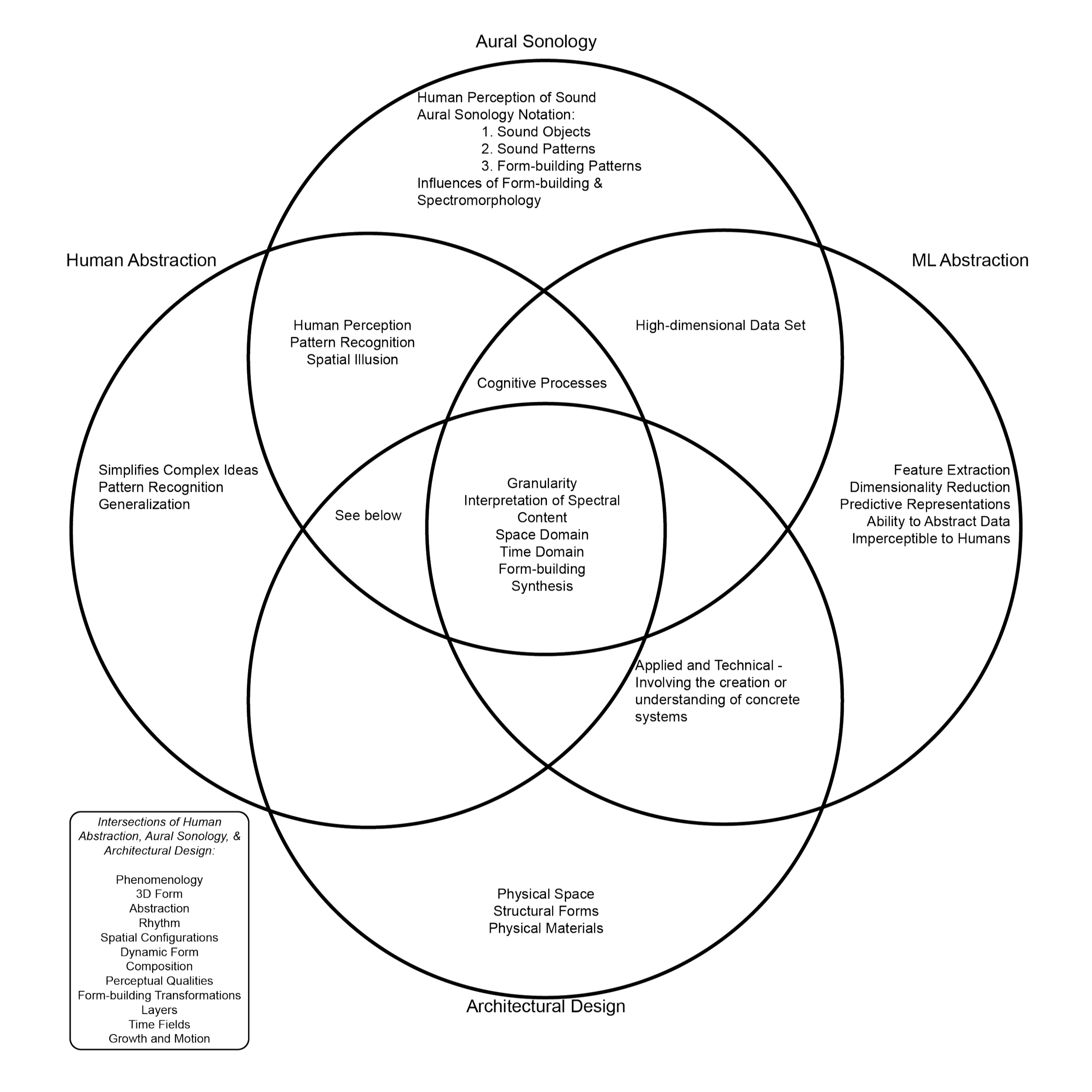
Machine learning is used to create an abstractive, recursive spatial design methodology. Existing theories around the volumetric and textural representations of music (Spatial texture, spectromorphology, sound objects, aural sonology, and auditory illusions) are adapted to a theoretical framework prolegomenon to inform a novel system to generate and integrate spatial texture into architecture. Simulation of spatial texture necessitates the utilization of the mind’s neural networks, relying on the perception of motion, space, time, and memories. Adapting aural sonology notation into architectural composition will bridge the gap between machine, abstraction, and music composition theories. The inputs into this artificial neural network of auditory, visual, and tactile abstraction include natural spatiotemporal textures, abstract sculptures, abstract paintings, related nature textures, and fine art.
By generating spatial texture, designers can reveal spatial, harmonic, textural, growth, gestural, sonify imperceptible data, spatial relationships between spatial illusions and memories of space, and other musical relationships visually. Incorporating aural sonology notation into the labeling system will enhance machine learning, making it a more human-centric AI for composing 3D music and spatial soundscapes.
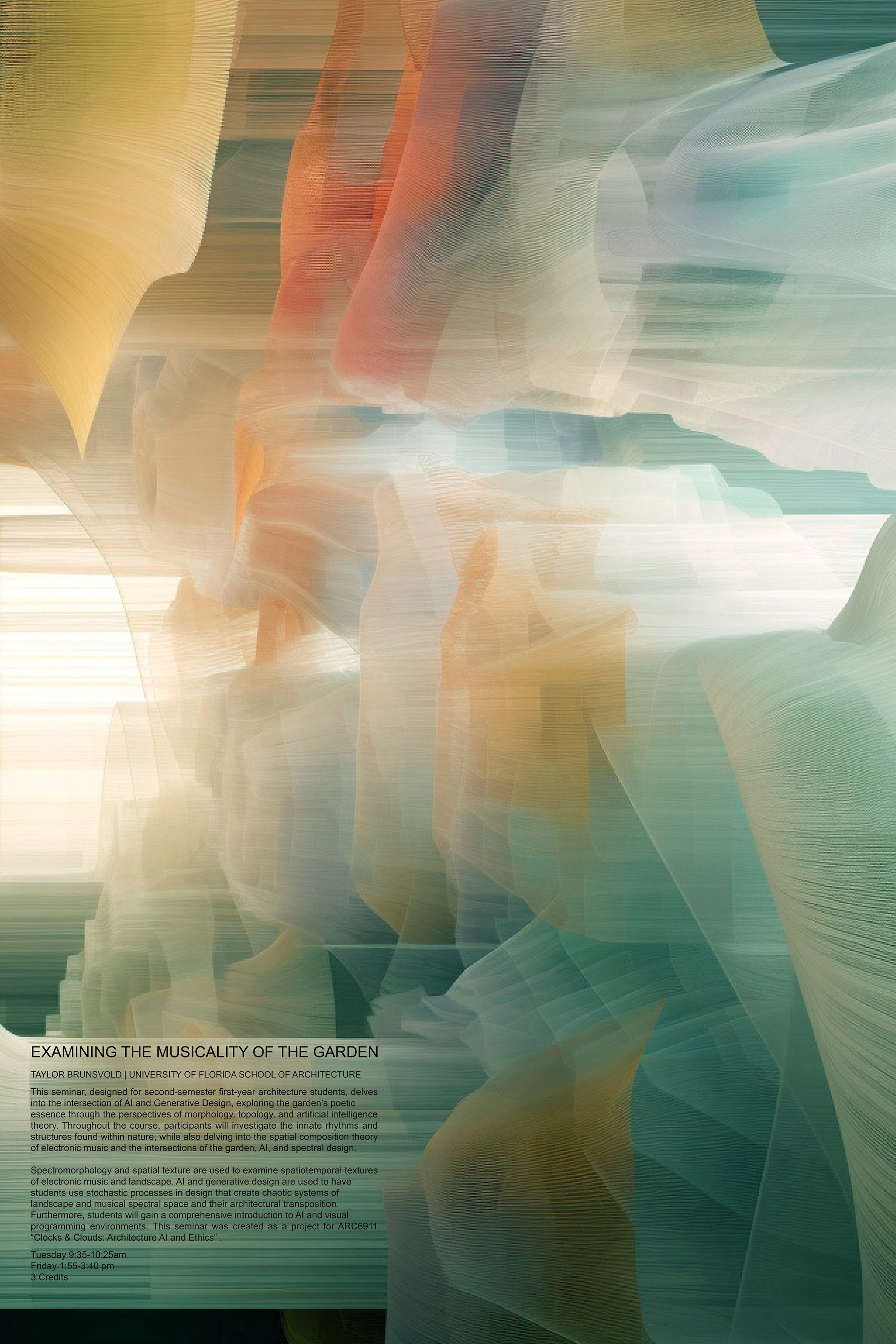
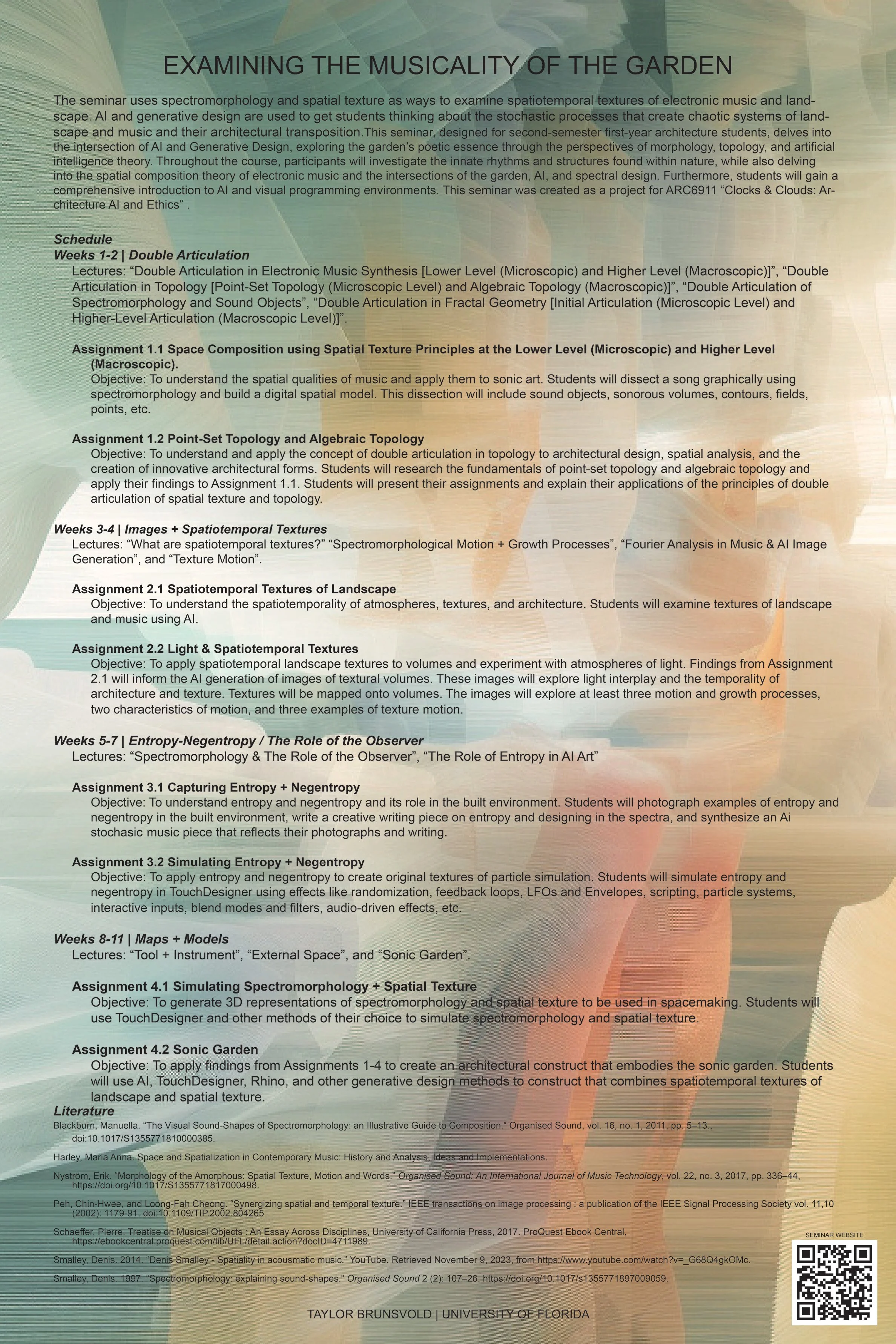
INTERSTELLAR SPACE FORM-FINDING
MATTHEW HAIGHT, COURTNEY SMITH, + TAYLOR BRUNSVOLD
“It is sufficient to think of the vast production of aleatory music, deconstructivism and all those compositional phenomena in which chaotic form is the result of a patient and transient research on the actual state of the cosmos.” - Alessandra Capanna, “Iannis Xenakis: Architect of Light and Sound”
The spectromorphological representations of volumes, planes, contours, points, and fields are emergent forms of music as heard. Spectromorphology refers to the study and analysis of sound’s spectral characteristics. This analytical tool for listening is concerned with motion and growth processes, which are not exclusively or even primarily sonic phenomena. An object- and energy-based approach was chosen because it is fit for celestial data. The data used to create these forms were derived from NASA’s exoplanet archive and the sonified data of the NASA Voyager Recordings. This data was then further visualized with noise, flocking, and wandering behaviors. This project was inspired by Alessandra Capanna’s quote in “Iannis Xenakis: Architect of Light and Sound” on chaotic form in aleatory music, a form of music in which some element of the composition is left to chance, and that it is the result of a patient and transient research on the actual state of the cosmos. The objective was to derive data from the cosmos to explore a phenomenological approach to composition.
NASA’s exoplanet archive is a catalog of data cross-correlated between exoplanets and their host stars. The NASA exoplanet archive offers a collection of exoplanets to the public for free and provides tools for understanding the data. With over 36,000 exoplanet observations, it was important to condense. Right ascension, the celestial equivalent of longitude, and declination, the celestial equivalent of latitude, were chosen as the primary parameters for this portion of the project. These values were used to locate each of the exoplanets on a sphere. Finally, the density parameter was chosen to understand the variations between each exoplanet. This segment’s objective was to represent celestial bodies in relation to Earth visually and subsequently link them to interact with sound objects. By utilizing the right ascension and declination coordinates of each exoplanet, each exoplanet was positioned relative to Earth. Each point then pulls towards the center of the Earth Sphere, stopping only when it collides with the surface of the sound object. New spheres were formed at these intersections, their sizes dictated by the density value of their respective exoplanets. The outcome is a galaxy-like visualization of exoplanets. This process was repeated with each sound object.
NASA’s Voyager probes, launched in 1977, recorded the outer planets’ electromagnetic wave emissions. Upon reception back on Earth, these electromagnetic emissions were then sonified into the auditory spectrum that humans can experience. The planet recordings provided frequency, amplitude, and spatial energy difference parameters that were extracted and analyzed. Frequency is related to pitch, so treble and bass. Amplitude is related to volume. Spatial energy difference refers to the changes in sound intensity perceived between the left and right channels, or ears in a person. These three parameters would then form a series of curves that create a 3D sculpture. Frequency, amplitude, and spatial energy difference data points were each averaged to 1000 entries and mapped to a cardinal direction. Where each data set created a series of or a single curve in 3D space.
The resulting curves were then piped to give the object volume. The first two objects, gliding and balanced, were explored with base curves that were then duplicated and altered based on the entered data sets. However, the final object, slinky, uses only the data points coiled around the z-axis. The resulting sound objects were then composed within space, and perspective renderings were interpolated using AI to create a dynamic composition of interstellar sound objects. The video above is an example of how multiple perspectives and understandings of space allow for a dynamic composition.“Stellar Whispers” is the spectromorphological representation of space data.
AI FORM-FINDING
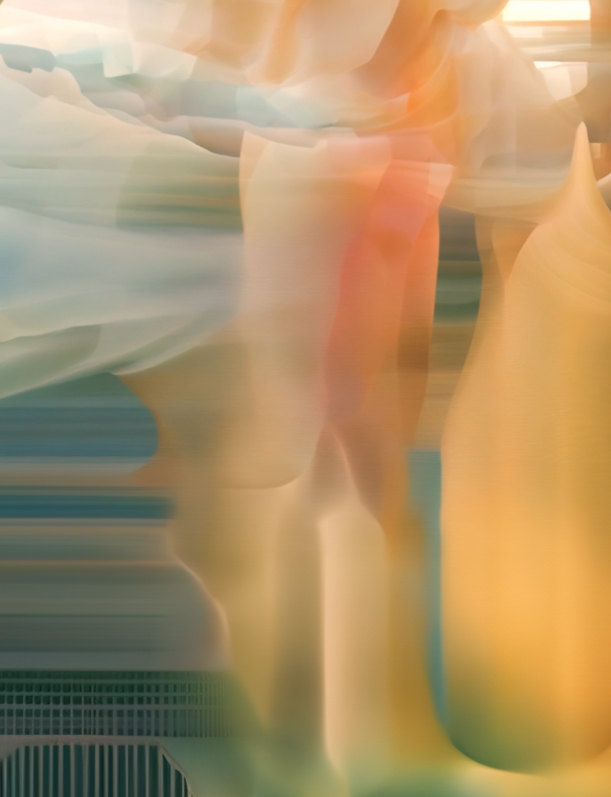
SPECTROMORPHOLOGICAL REPRESENTATION
An AI representation of music as volumes, points, planes, contours, and fields.

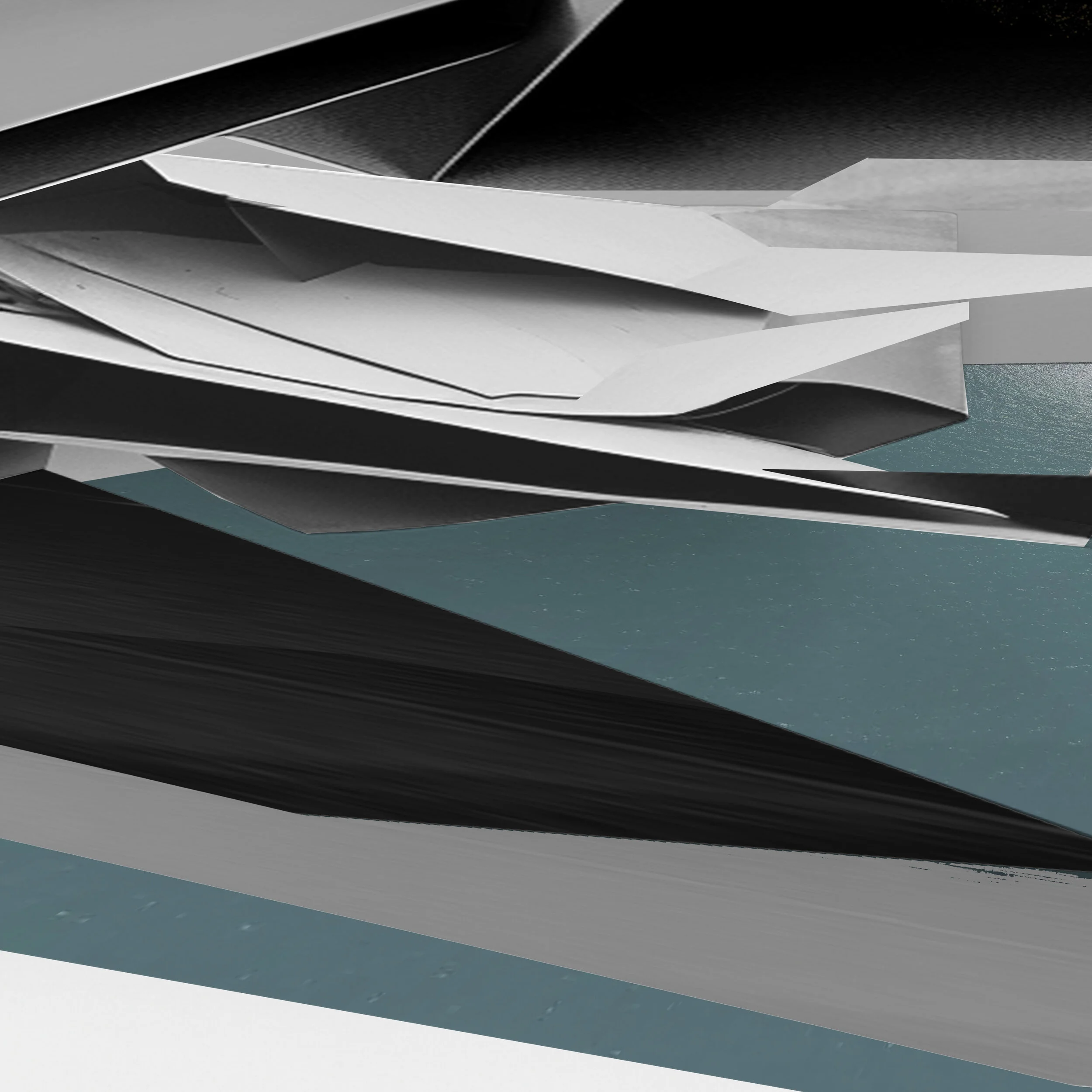
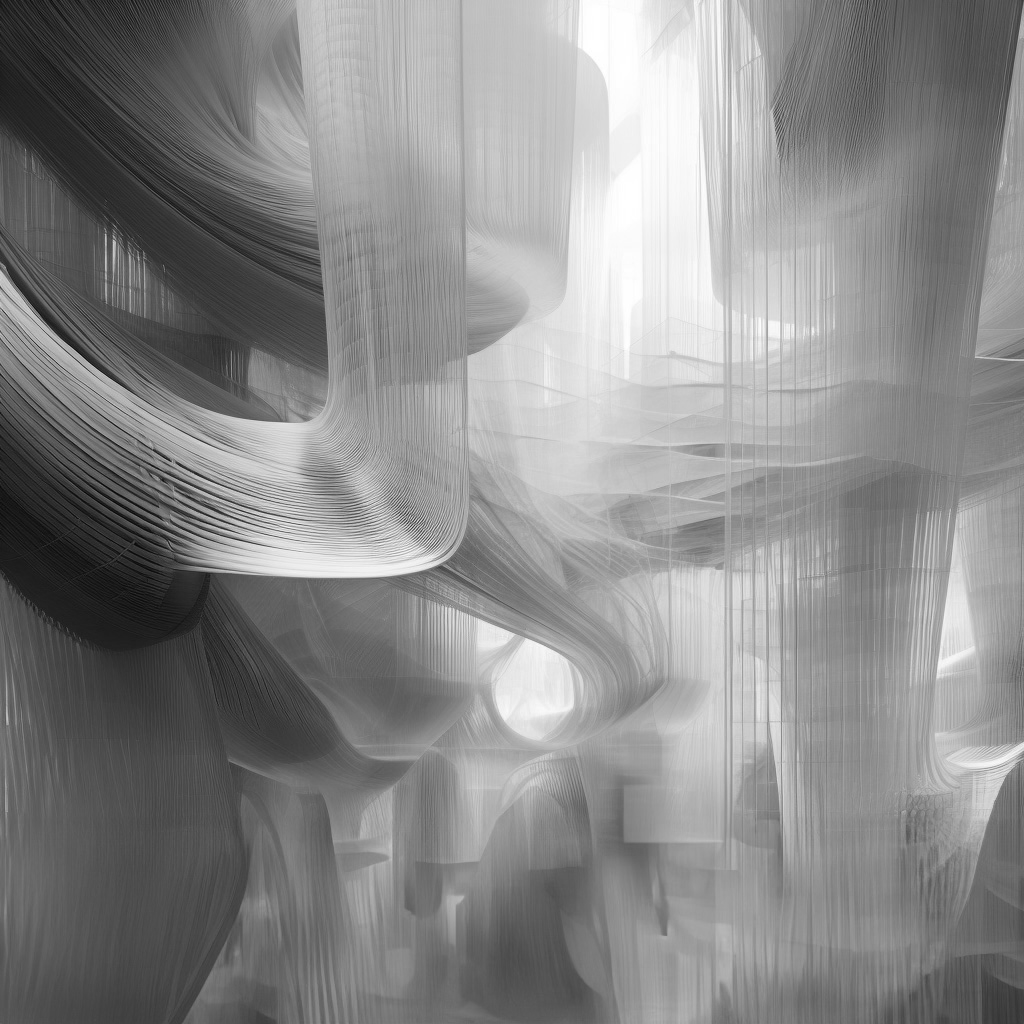
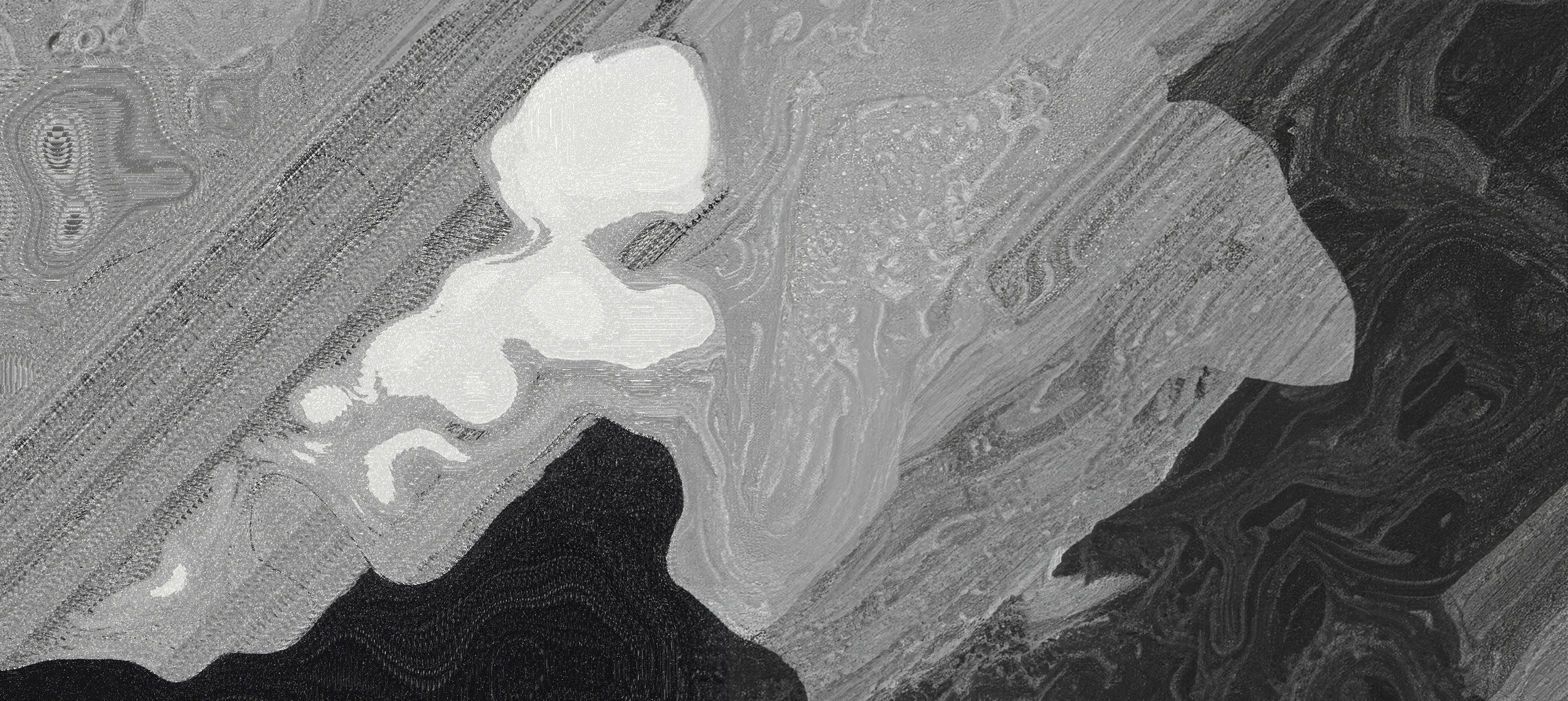
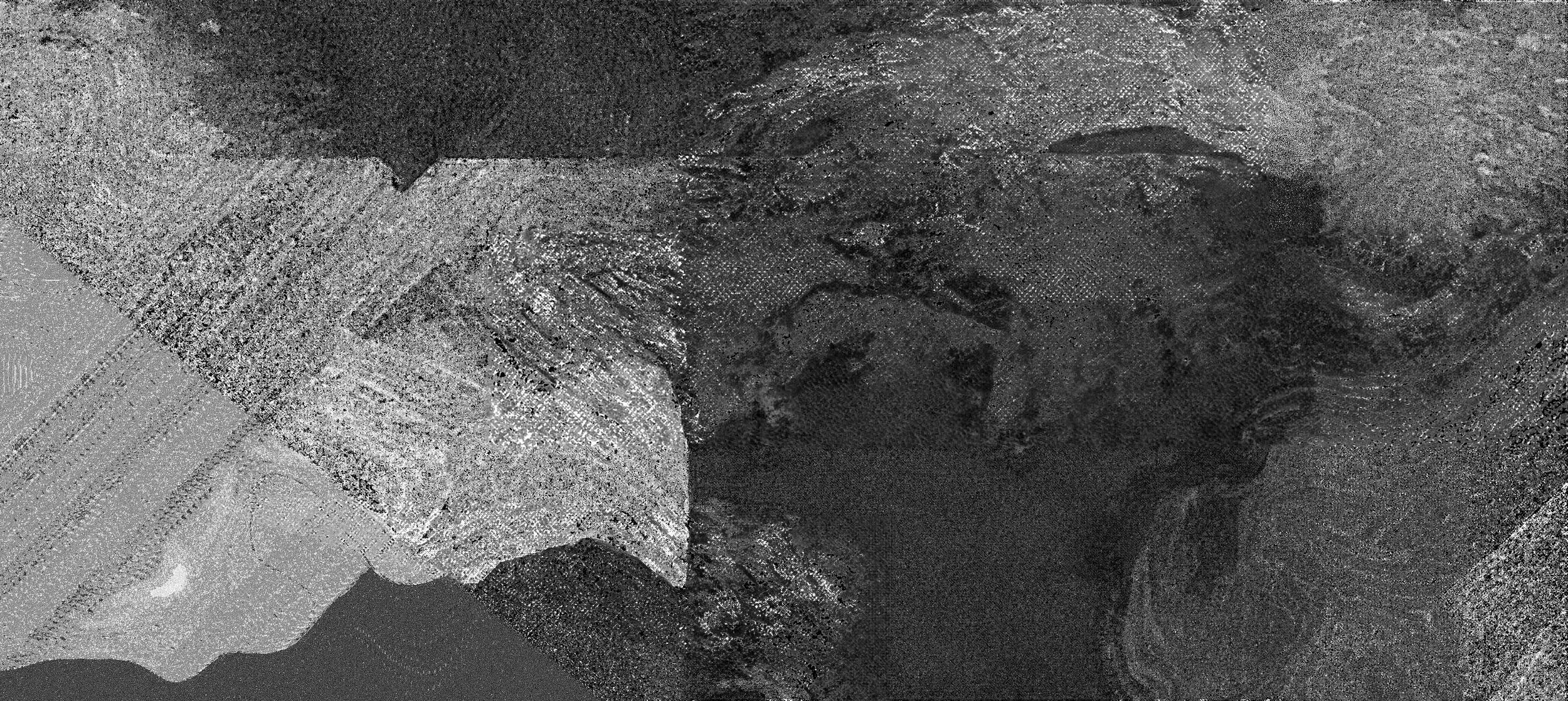
3D PERLIN NOISE FEEDBACK
Perlin noise, known for its ability to generate naturalistic and organic patterns, can be utilized to create complex and nuanced spatiotemporal textures. It can also be applied to simulate phenomena such as atmospheric textures, water ripples, flocking behavior, and sky textures. Progressive feedback graphics were created in TouchDesigner and then collaged.
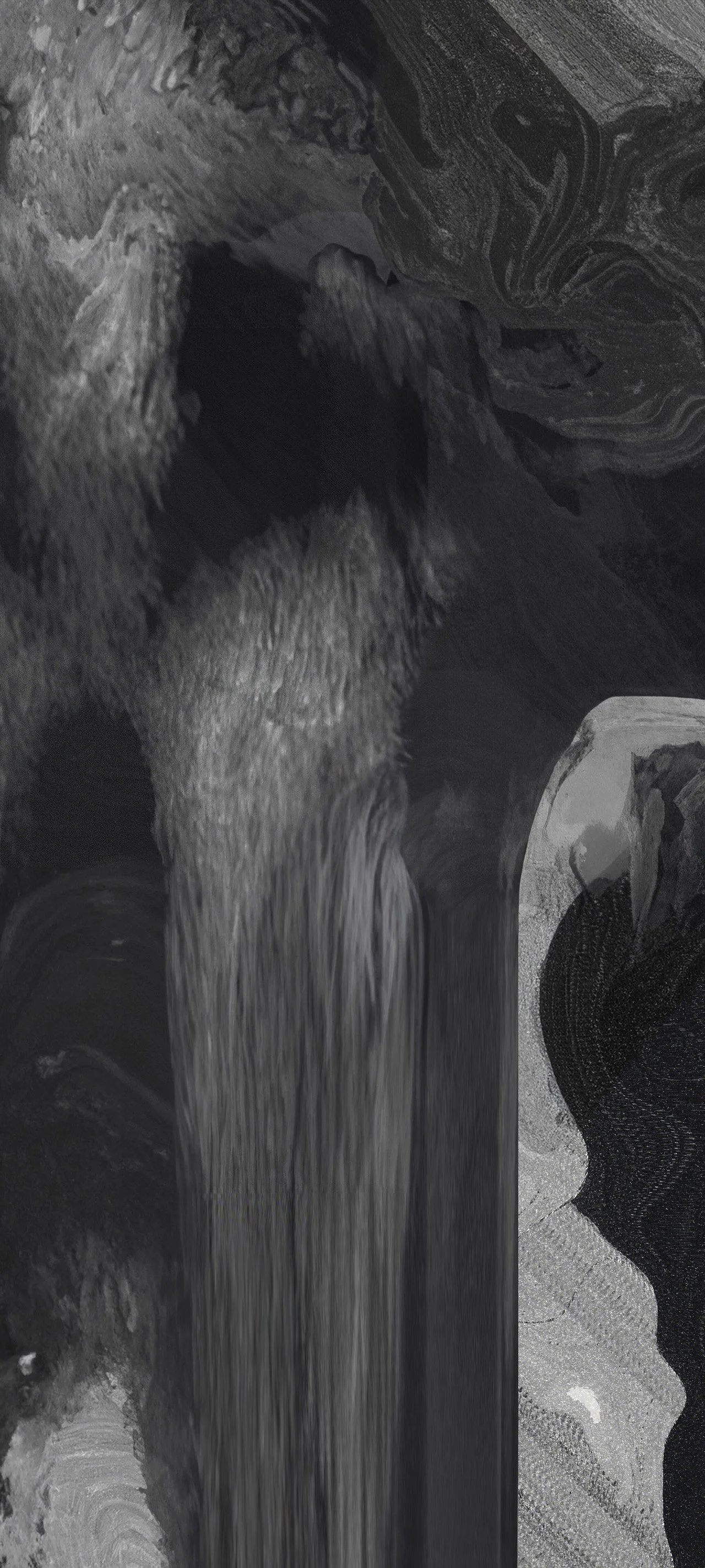
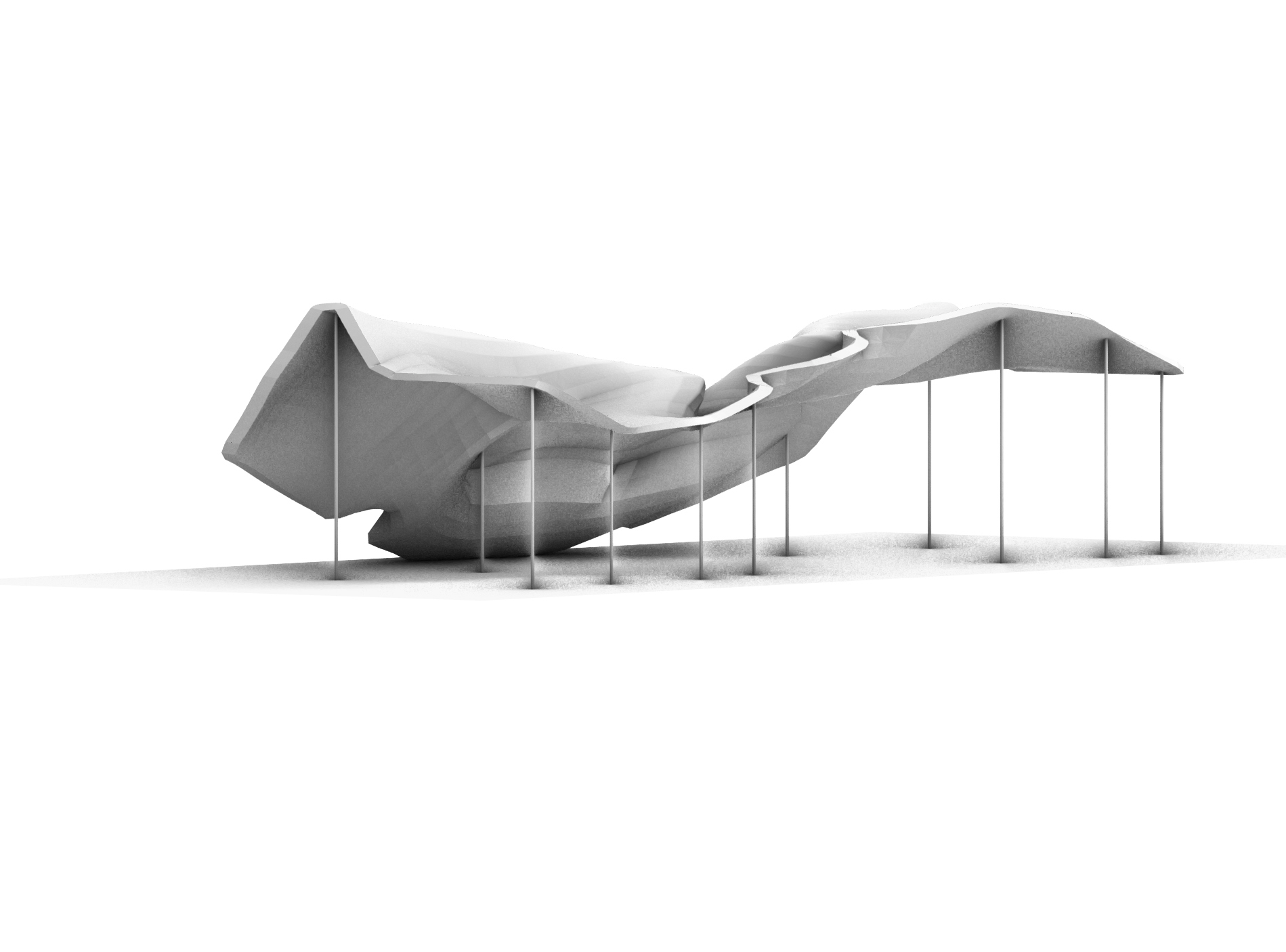
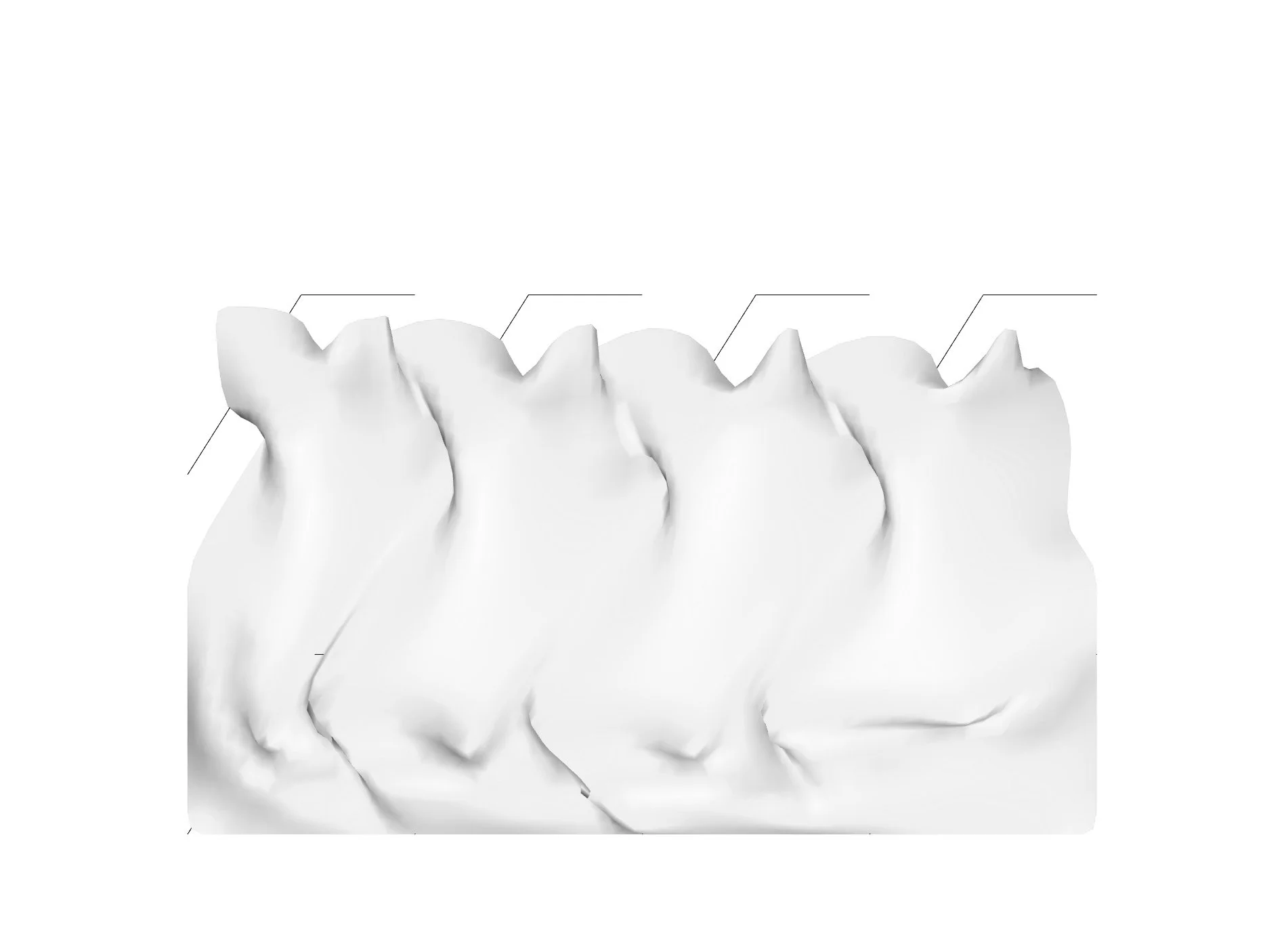
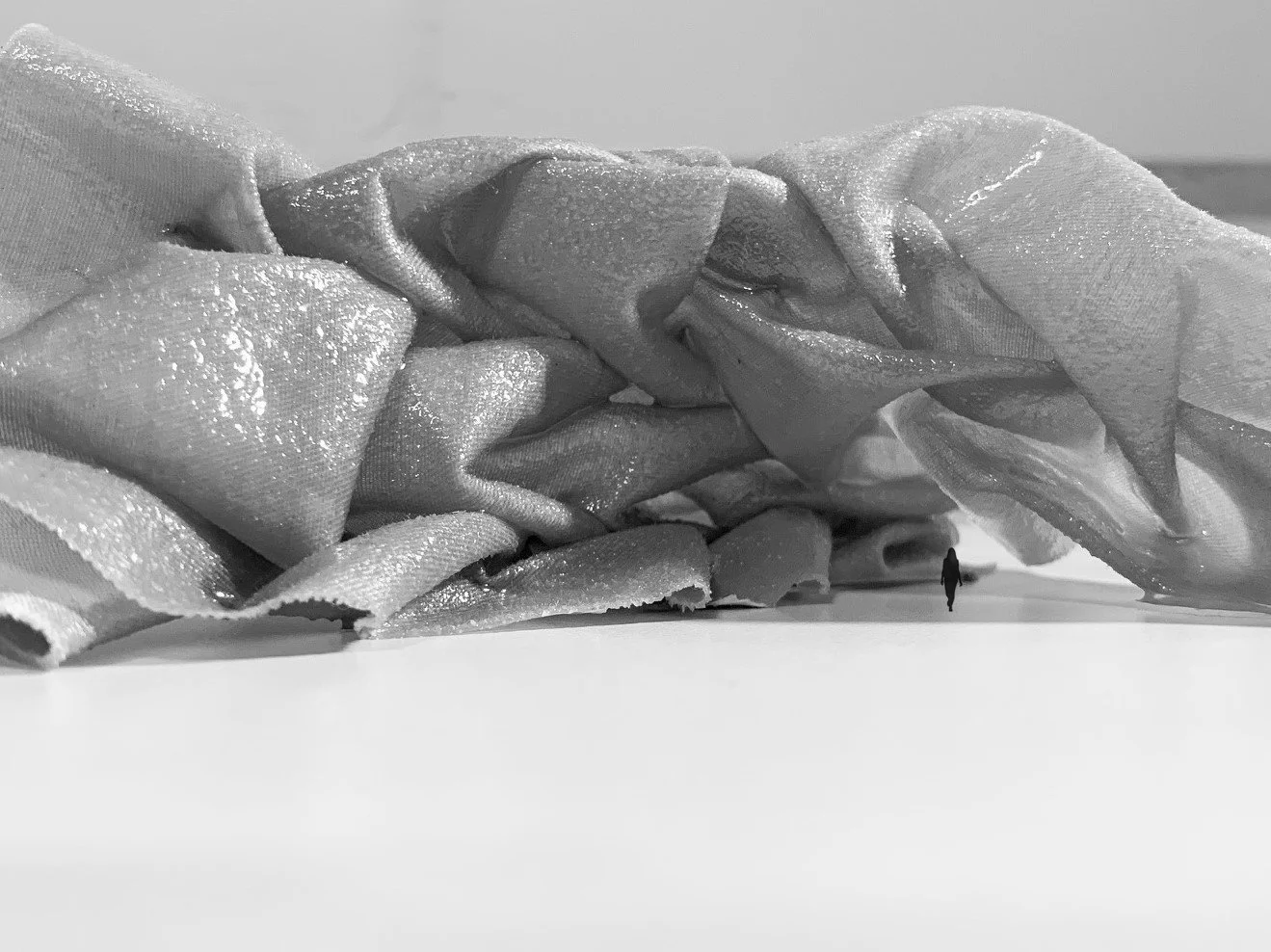
SCULPTURAL SMOCKING
Explorations into the spatial qualities of shell and fish smocking and its architectural applications.
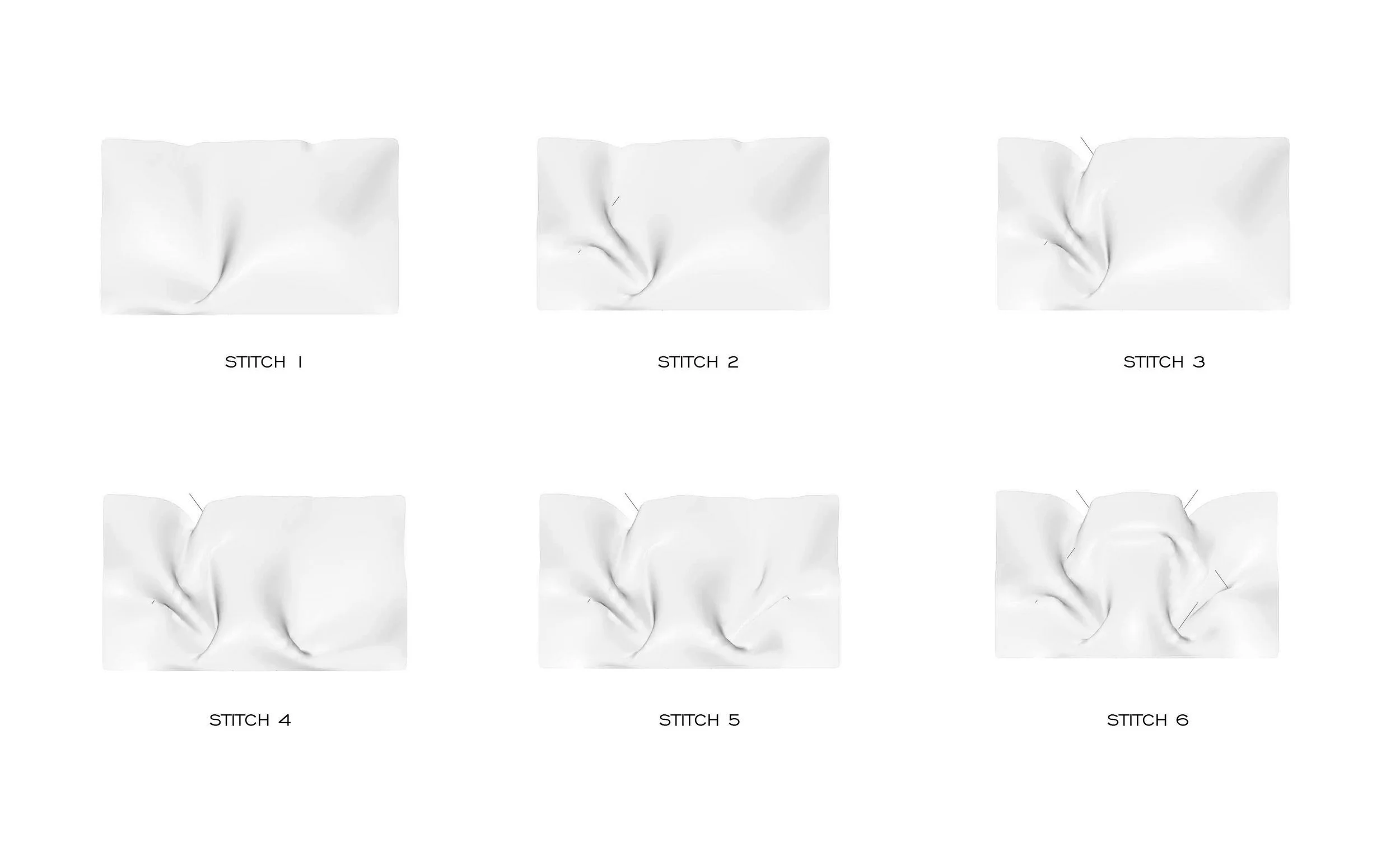
Grasshopper Parameters:
Grid X-Stretch
Grid Y-Stretch
Stitch Length/Line Length
Stitch Tension
Bracing Z
Bracing X, Y
Collisions
Pressure
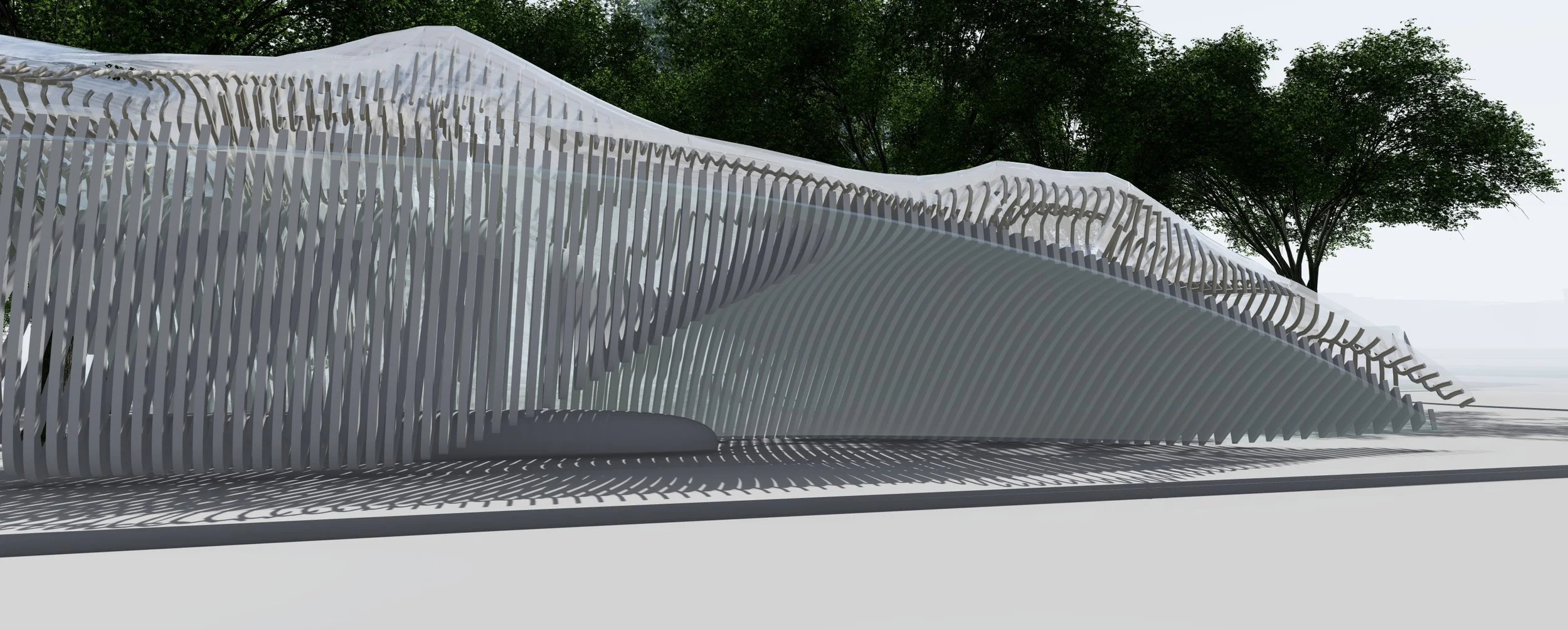
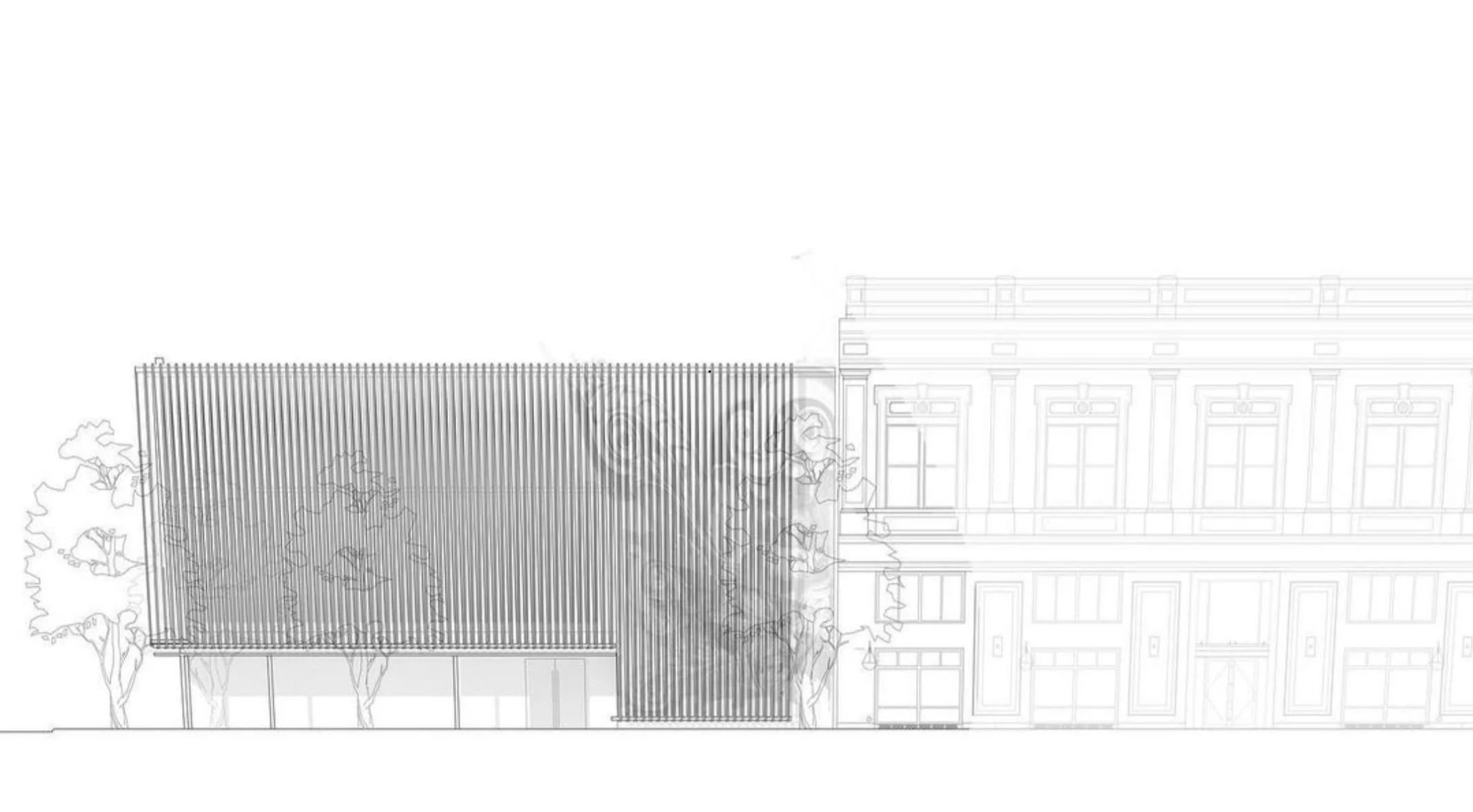
GAINESVILLE DESIGN FORUM
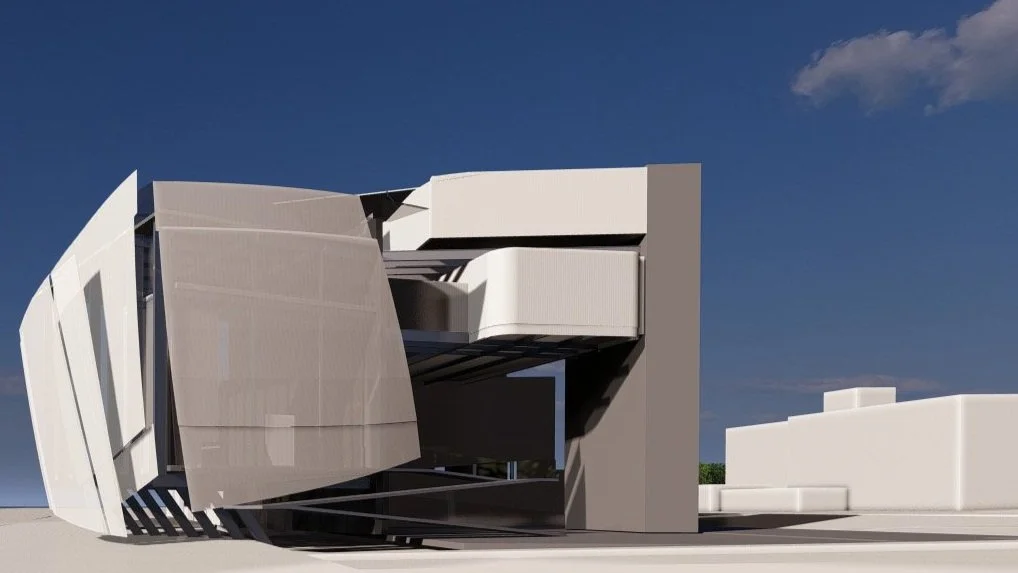
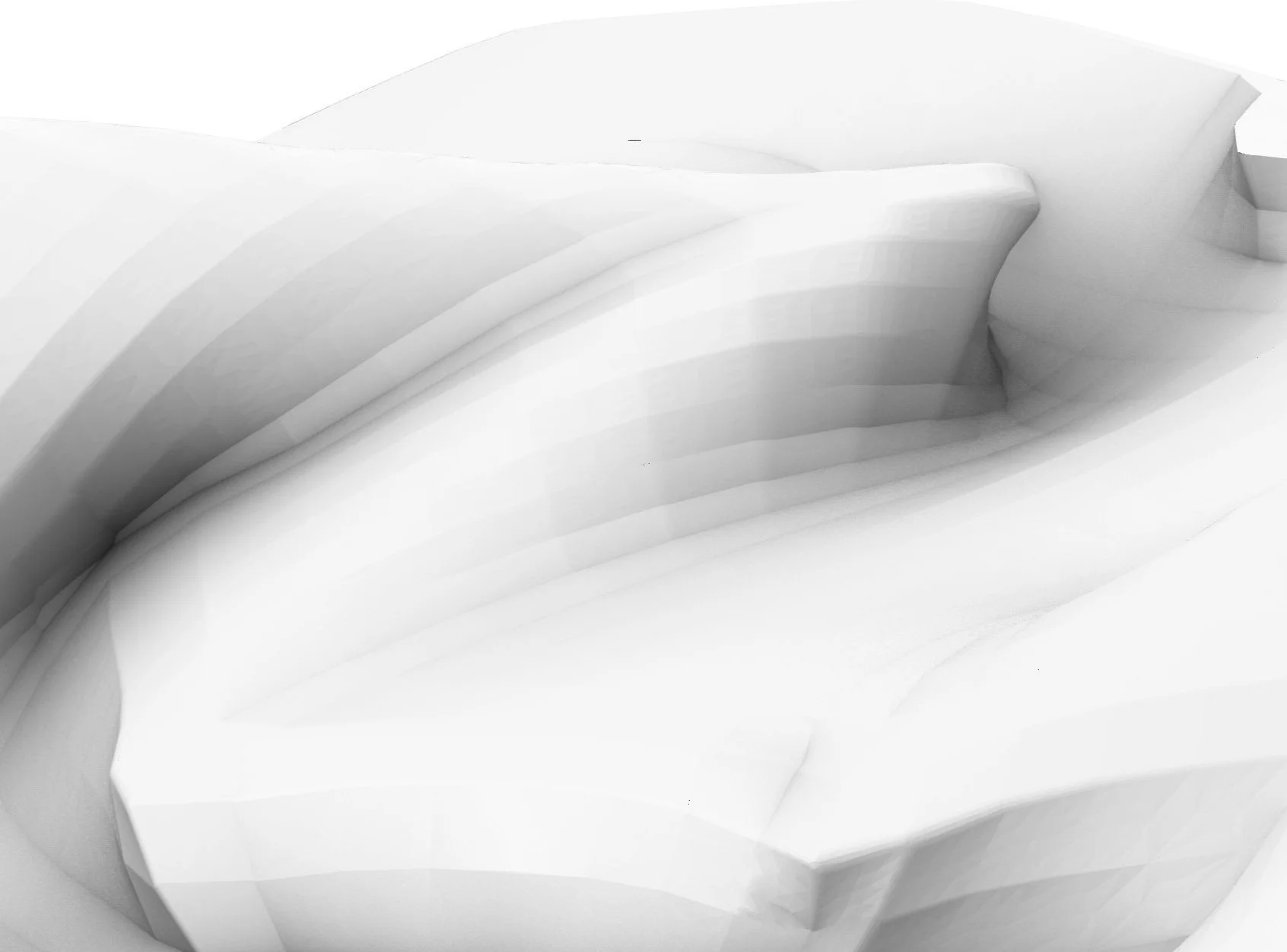
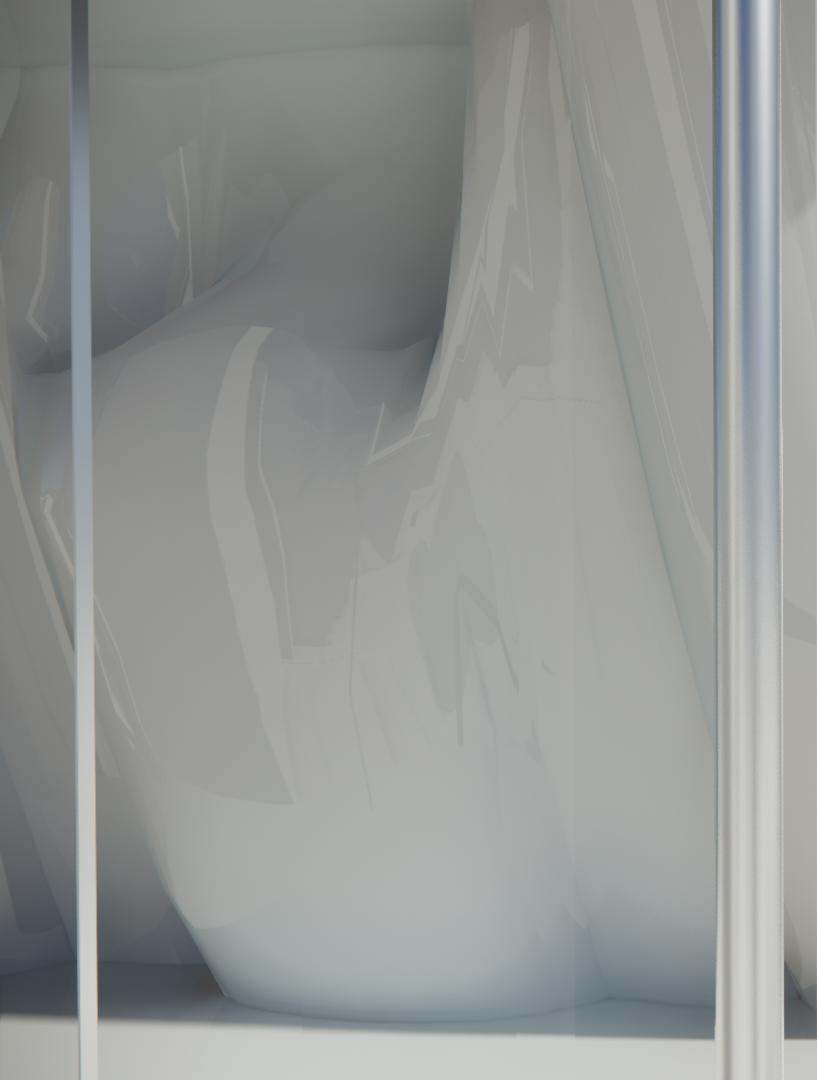
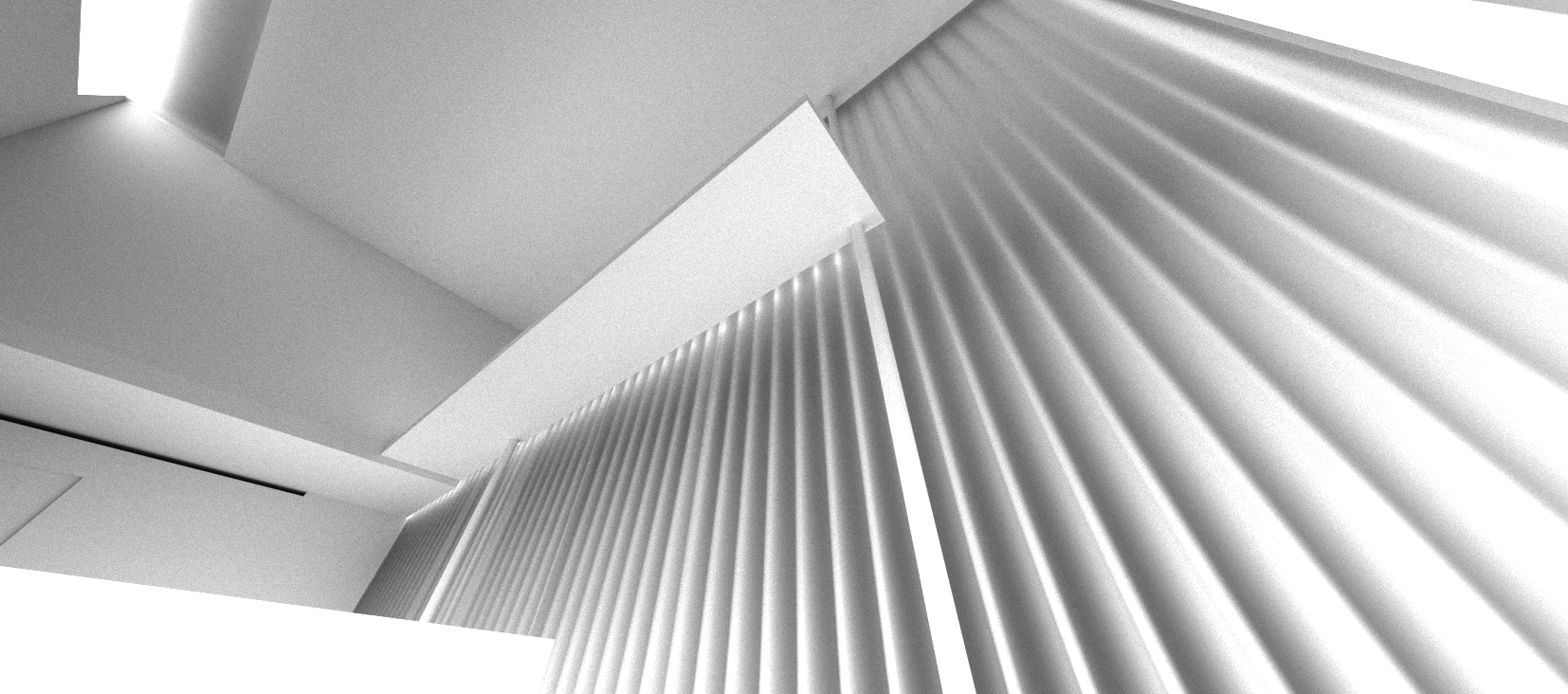
A modern building designed for local art exhibition that draws inspiration from the beaux arts and is a testament to the modernist beautification movement in downtown Gainesville, Florida. The facade features a combination of a beaux-arts column and a twisting, undulating screen, inspiring a sense of modernity and progress.
SUSPENSION / SINGLE FAMILY HOME | TYONEK, ALASKA
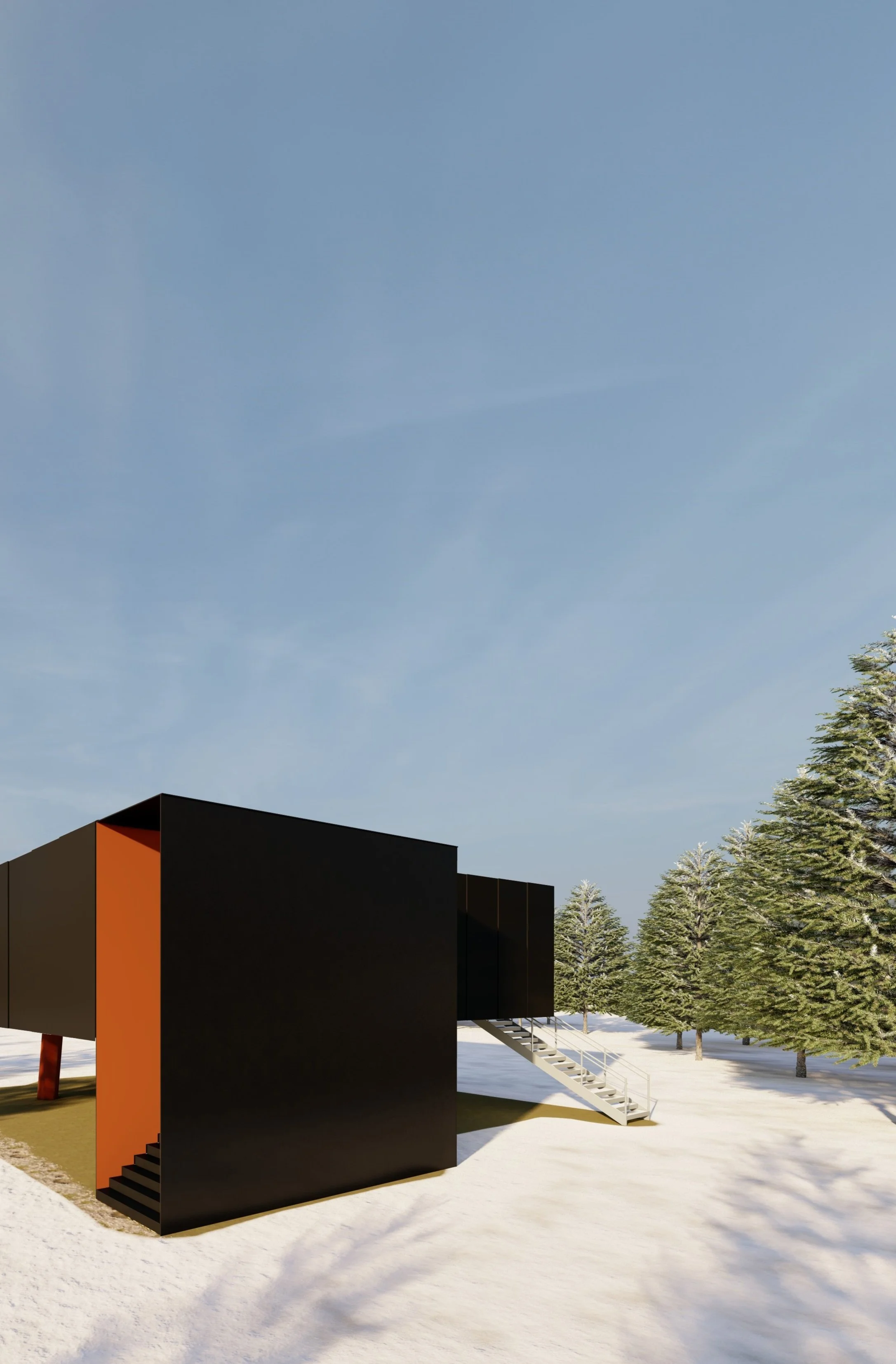
“Suspension” addresses seismic issues in Tyonek, Alaska, by elevating the home and giving it a secure footing in the event of an earthquake. The other concerns for the site were material and solar power. “Suspension” is used in its various definitions to study the qualities of occupation that exist at the form and material level. The definitions of suspension applied to the project are:
1. The temporary prevention of something from continuing or being in force or effect.
2. The system of springs and shock absorbers by which a vehicle is cushioned from road conditions
3. A mixture in which particles are dispersed throughout the bulk of a fluid
Similar terms used to reflect the aspects of suspension reflected in a graphic form and materiality are pause, cantilever, space, float, turbidity, surface tension, tension, and hover.
The elevated mass-timber structure, carefully designed to withstand seismic activity, hovers above its site in rural Tyonek Alaska. This design not only ensures the safety of the building but also provides a sheltered space underneath for storage, enhancing the functionality of the structure.
The site is a south-facing lot in the Indian Creek Subdivision north of Tyonek Village. The project was inspired by Redshank by Architect Lisa Shell in 2014. The project was an artist’s studio of CLT and cork cladding on steel columns. NLT was used as an alternative for CLT for this project to limit off-gassing. Cork cladding was replaced with EPDM. The Tyonek home addresses a larger program of a home for three to eight people.
The primary structure of the house consists of NLT and glulam beams, which limit the embodied carbon and weight of the home. The insulation utilized is wood fiberboard insulation. The exterior of the house is clad in EPDM. Neoprene rubber is an alternative weatherproofing construction material that may be less susceptible to bubbling when used vertically compared to EPDM. Before its implementation, testing must be done on EPDM and Neoprene rubber sheets with different fastening patterns and systems.
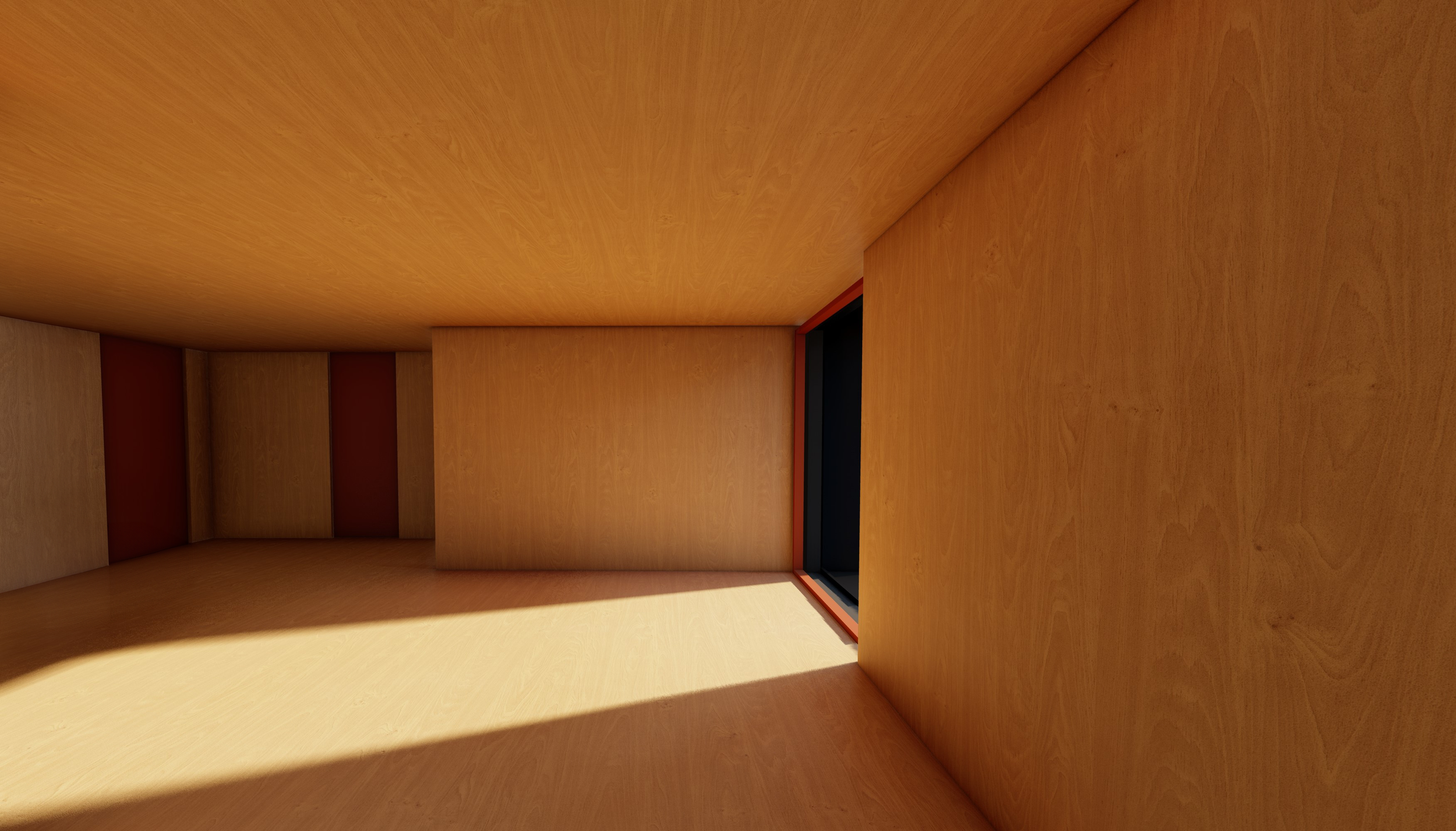
The elevated structure and the need for sunlight to come through the south elevation of the building led to the decision to attach the solar panels to the sauna and smokehouse buildings accompanying the main house. Solar heat gain through low mass is utilized through the mass-timber and rubber-cladded building. The floor plan is centered around the furnace as the central heat source. Super insulation is used to create the form of the building. The house uses warm-toned materials, carefully selected to absorb sunlight and blend harmoniously with the local environment, making it visible in the snow.
Material studies were done with palettes of warm materials that reflect the suspension definition of particles being dispersed throughout the bulk of a fluid. This suspension reflects the mottled qualities of the grasslands of Tyonek and the streams that feed the ecosystem.
NEW BEDFORD OFFSHORE WIND TRAINING FACILITY
ENVISION RESILIENCE - NEW BEDFORD AND FAIRHAVEN CHALLENGE
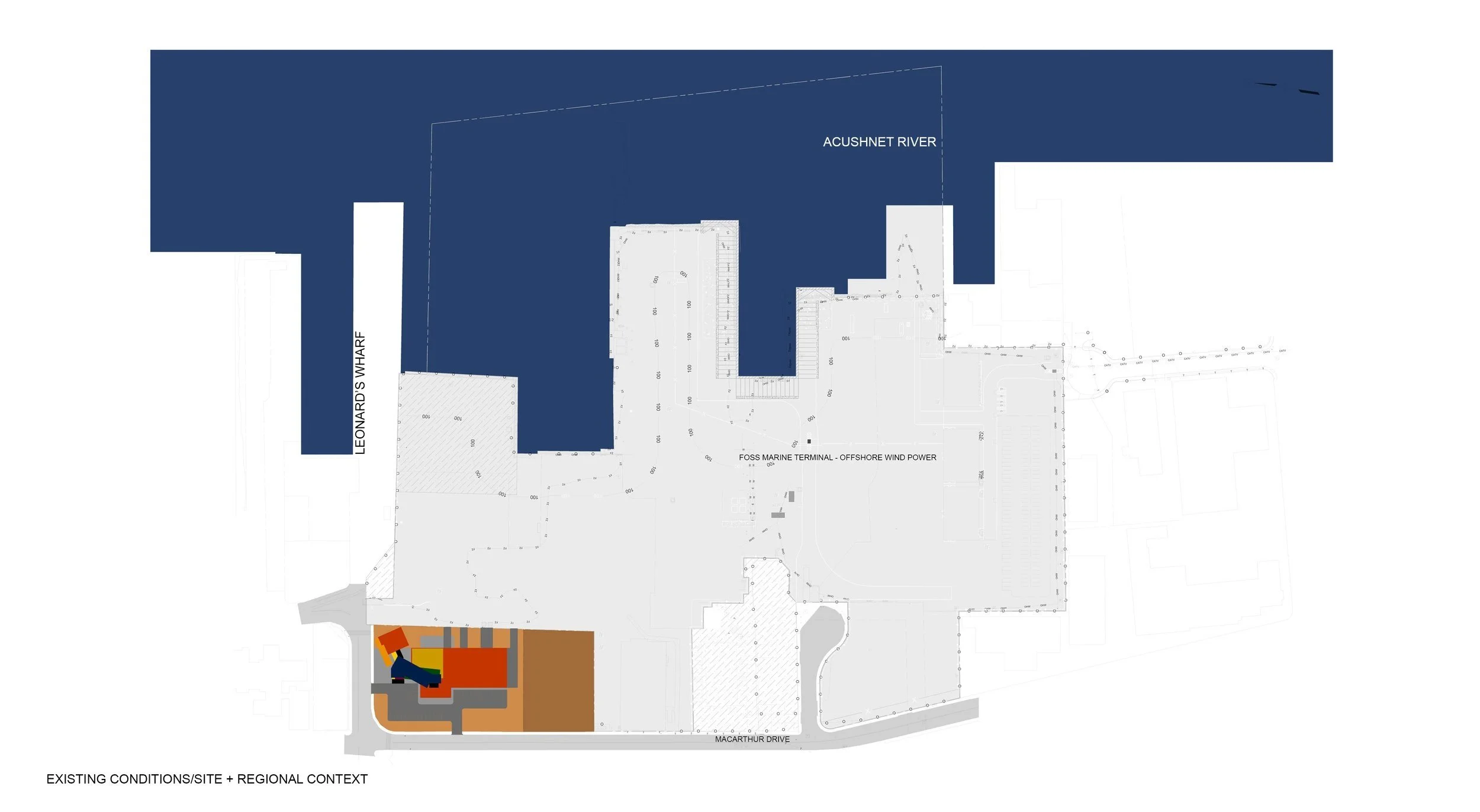
The New Bedford Offshore Wind Power Training Facility represents a course change of the industry of New Bedford to offshore wind. The building is an architectural solution that reflects the historic significance of wind in the industries of New Bedford and ties the wind power training facility to the marine industry. The facility uses sustainable design strategies and materials to be part of the circular steel economy of New Bedford. It is a space for the public to learn more about the offshore wind industry and the wind industries of New Bedford. The architecture is ecologically sustainable through the construction materials; recycled steel to be part of the circular economy of the region. The facility also trains offshore wind personnel that catalyze new economic enterprises and create employment opportunities. The facility is adaptable to any industry that may inhabit the Port of New Bedford and the design is still reflective of New Bedford without the presence of the wind industry.
Building 1 is a gestural sail building that wraps Building 2 capturing the motion of buffeting caused by a significant unforeseen change in wind direction that makes the vessel autotack. Each part of the program corresponds to the motions of jerking, oscillating, and falling. Building 2 is an adaptable warehouse that supports the Port of New Bedford. Building 2 includes the Work Hall with supporting labs, classrooms, Exchange, and Depot. The building allows workers to travel between the industrial zones of the program without leaving the building. All three industrial zones are accessible by truck on the east side.